- Pick Up -
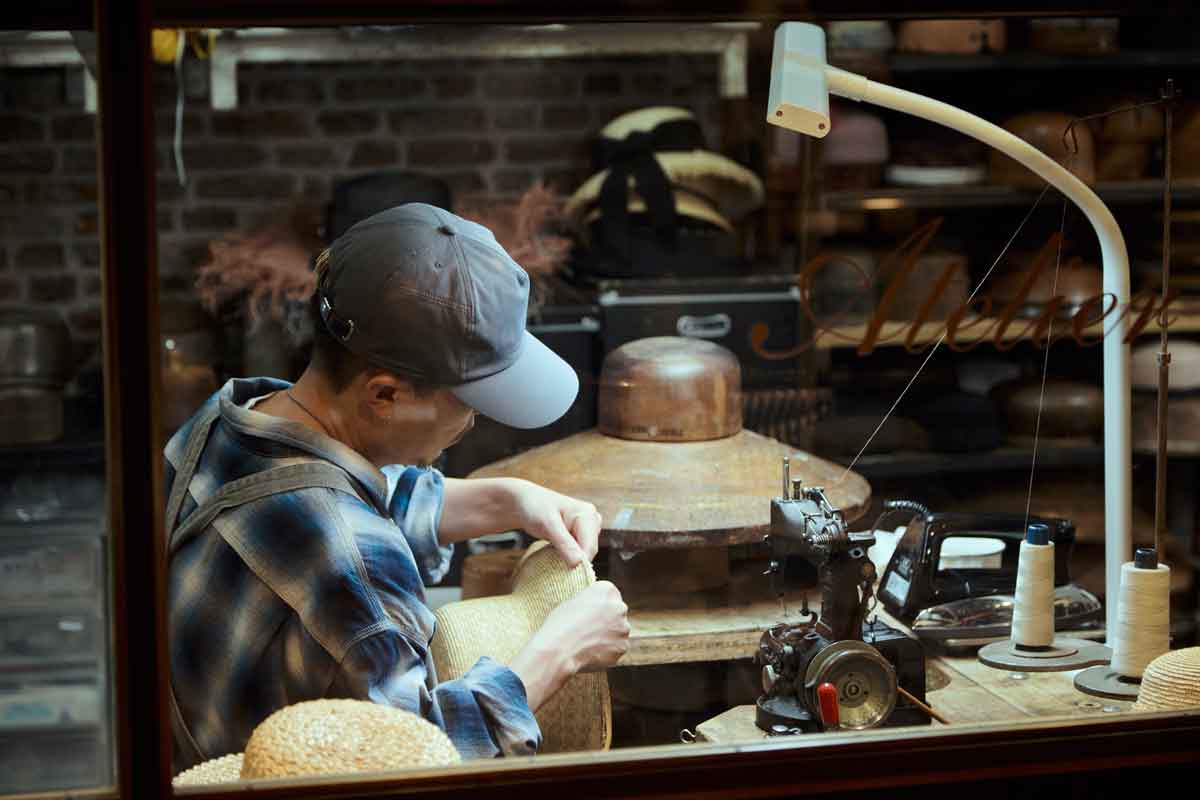
The setting for this event is the atelier located on the second floor of CA4LA Omotesando.
This is a place where skilled craftsmen embody the brand's commitment to quality in the wide range of hats that CA4LA offers, using their unique sense of style and technique.
In that space, seamlessly connected to the bustling atmosphere of the shop, each hat is created through the skilled handiwork of artisans.
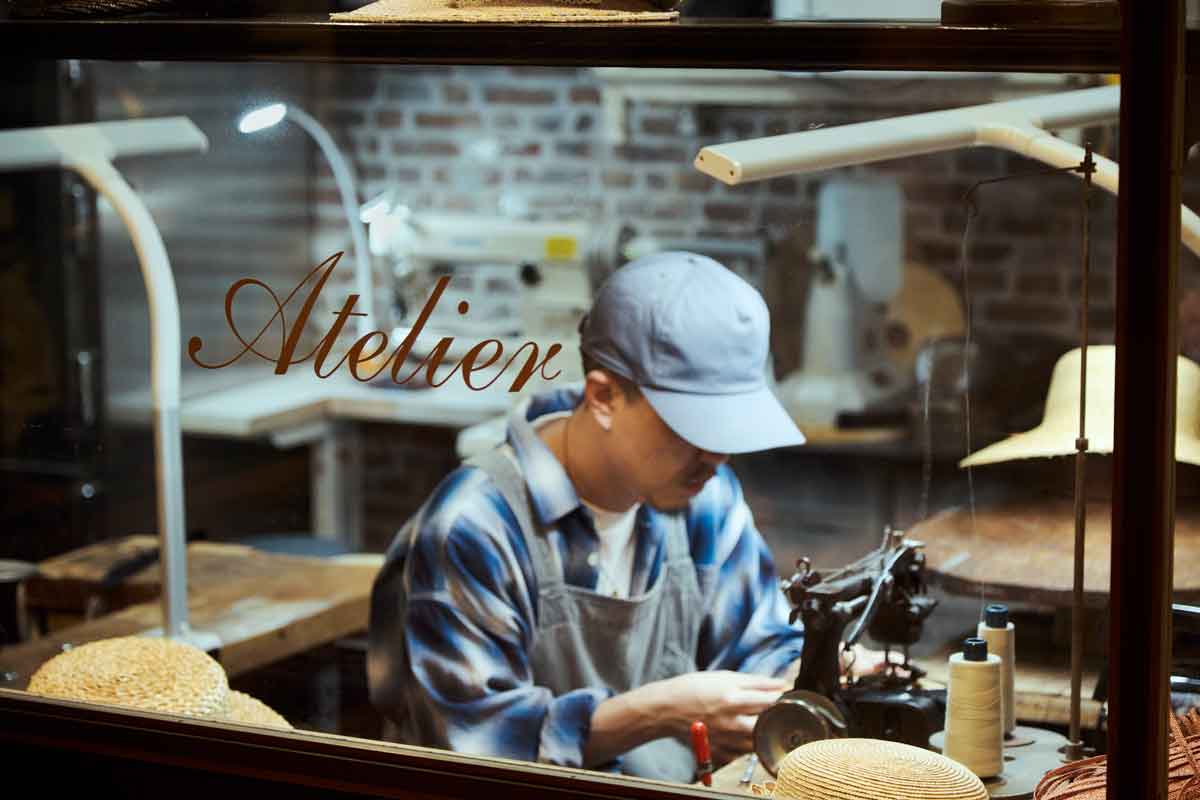
Visible through the glass is Rintaro Suzuki, one of the nation's leading hat makers.
We'll follow his hands as we delve into his techniques and passion.
- The Making -
STEP 1 Sew in a spiral pattern
"Basically, there's no manual. There's just 'your own right answer,' though."
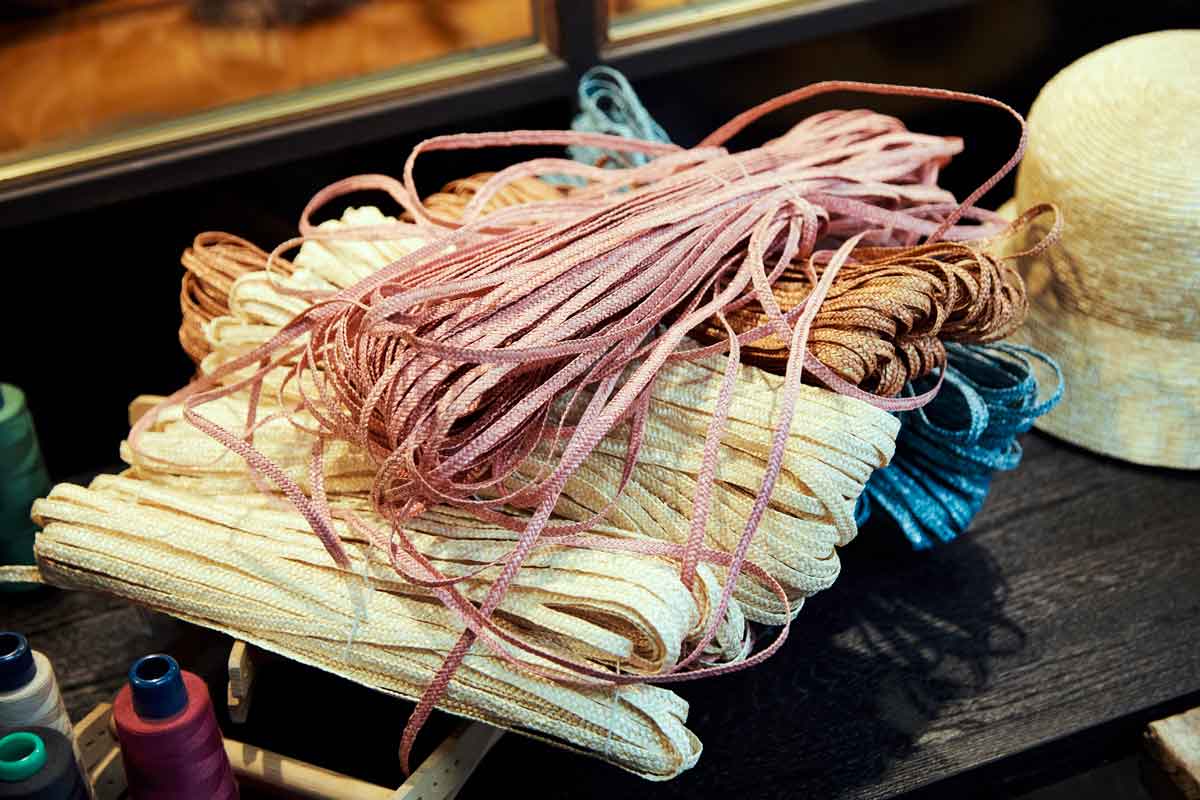
A single tape-like material—“braid.”
From layering it in a spiral, the process of making each hat begins.
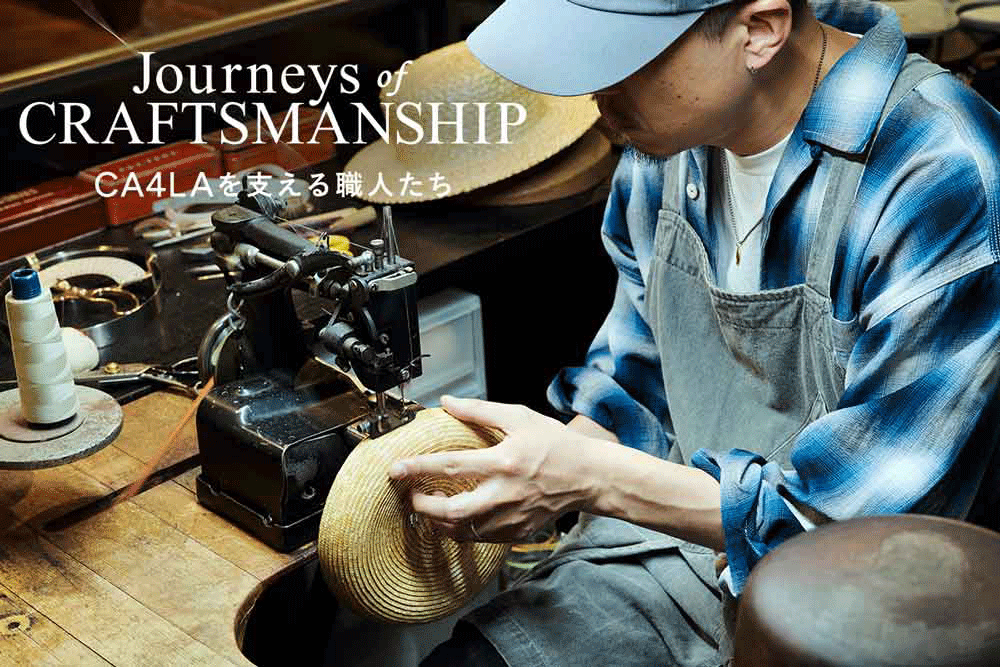
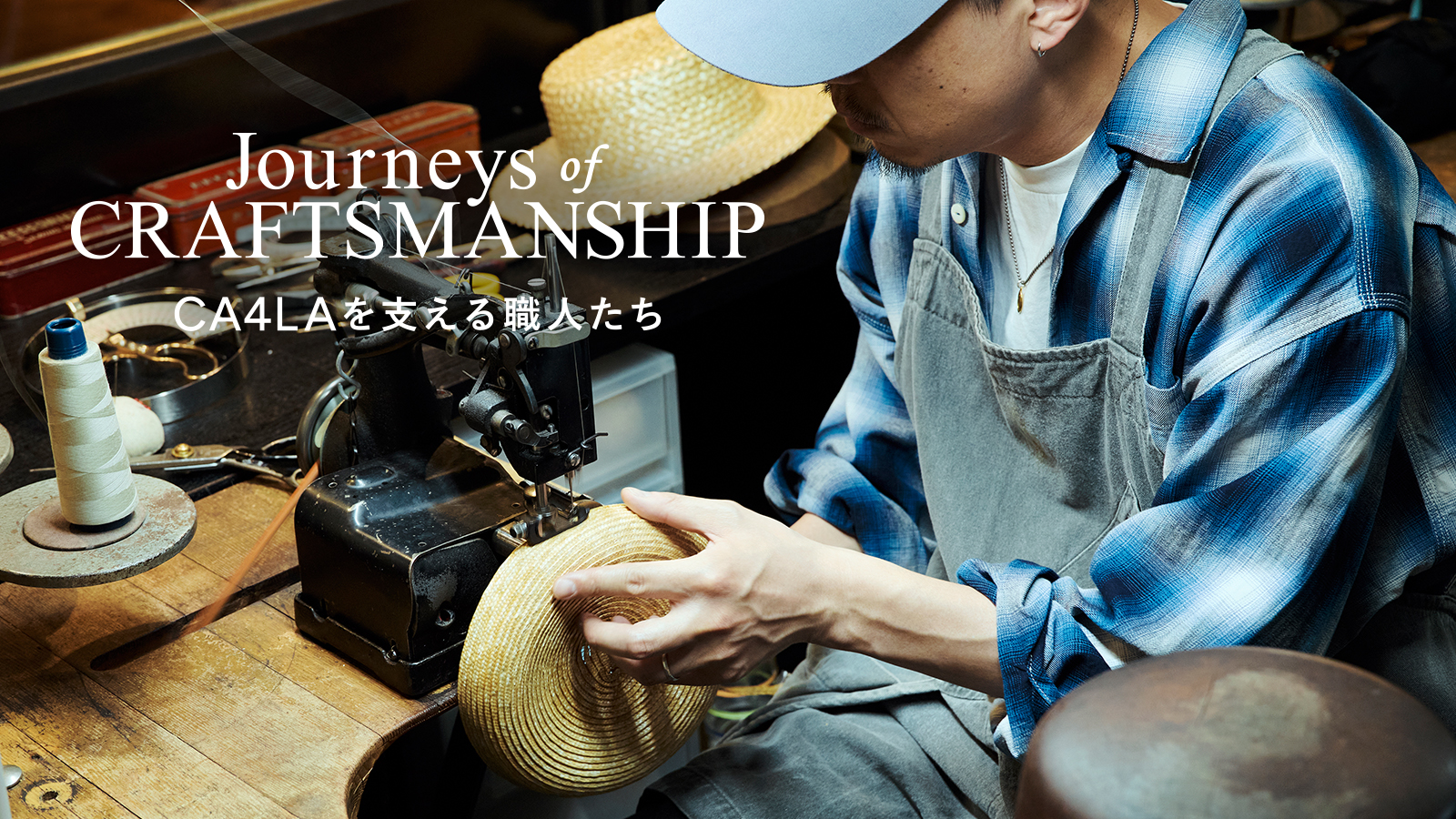
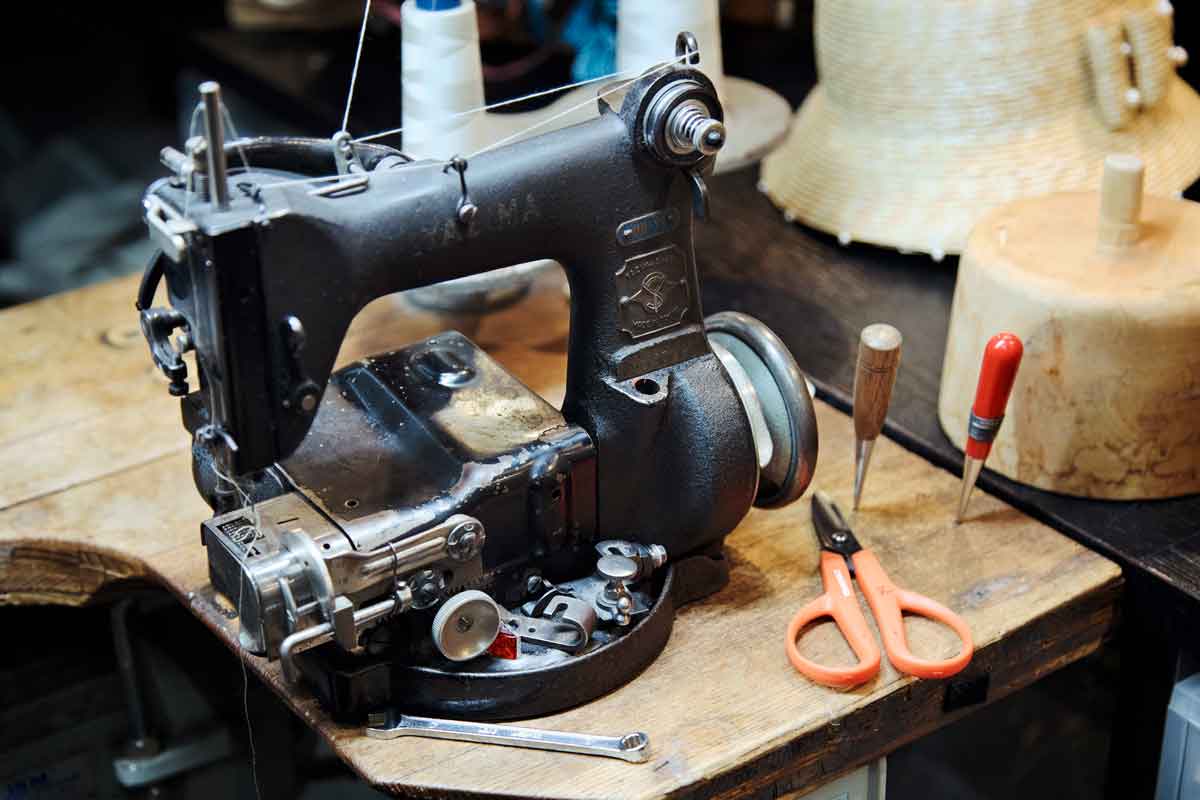
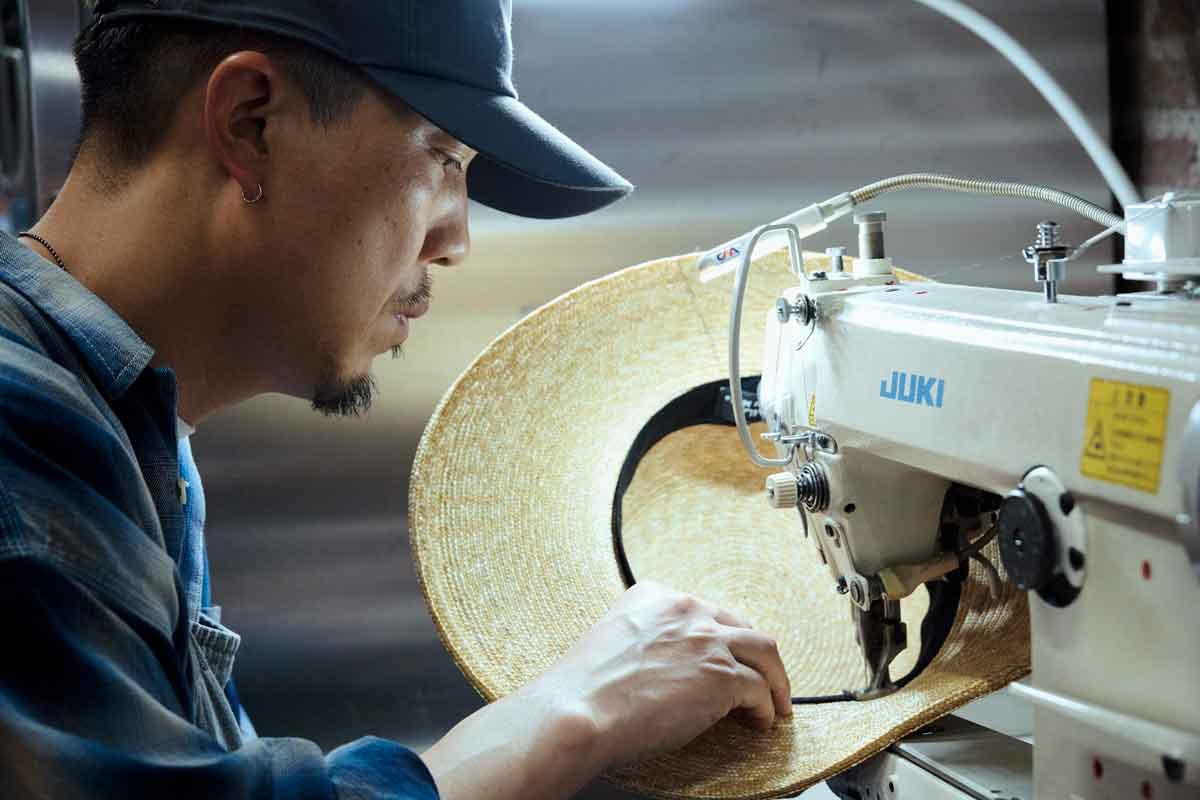
The tool of choice is a rare sewing machine, passed down through generations of artisans.
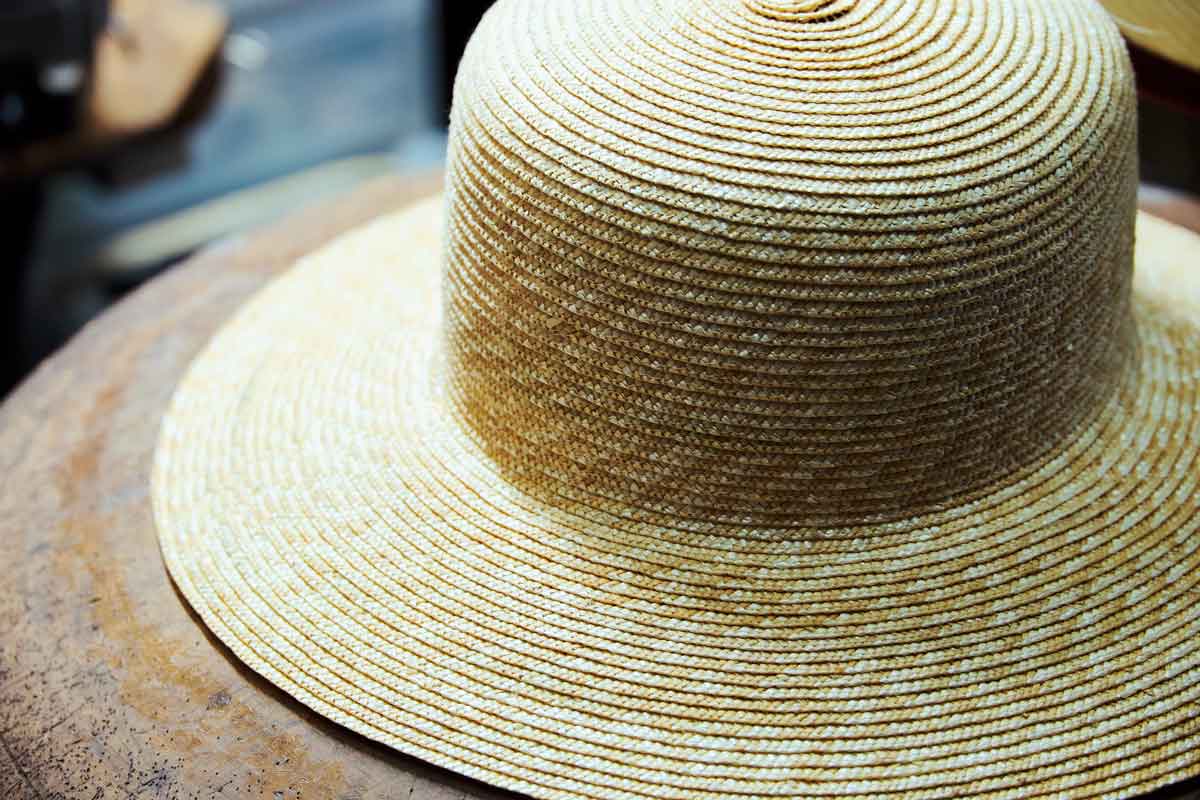
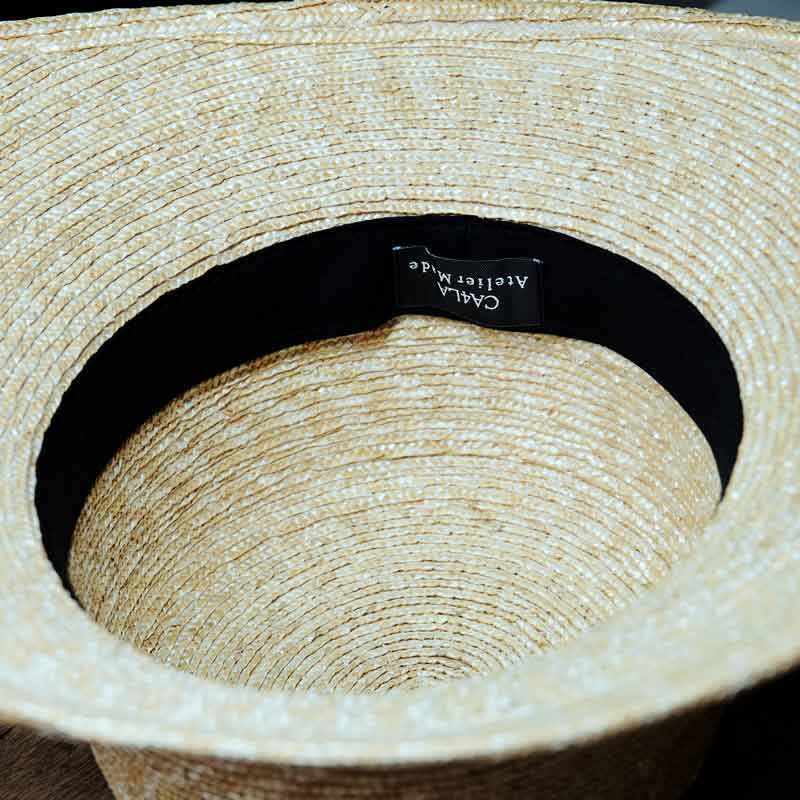
A beautiful, uniformly wide vortex spreads out from the top of the head.
It's a delicate job where even the slightest deviation is unacceptable.
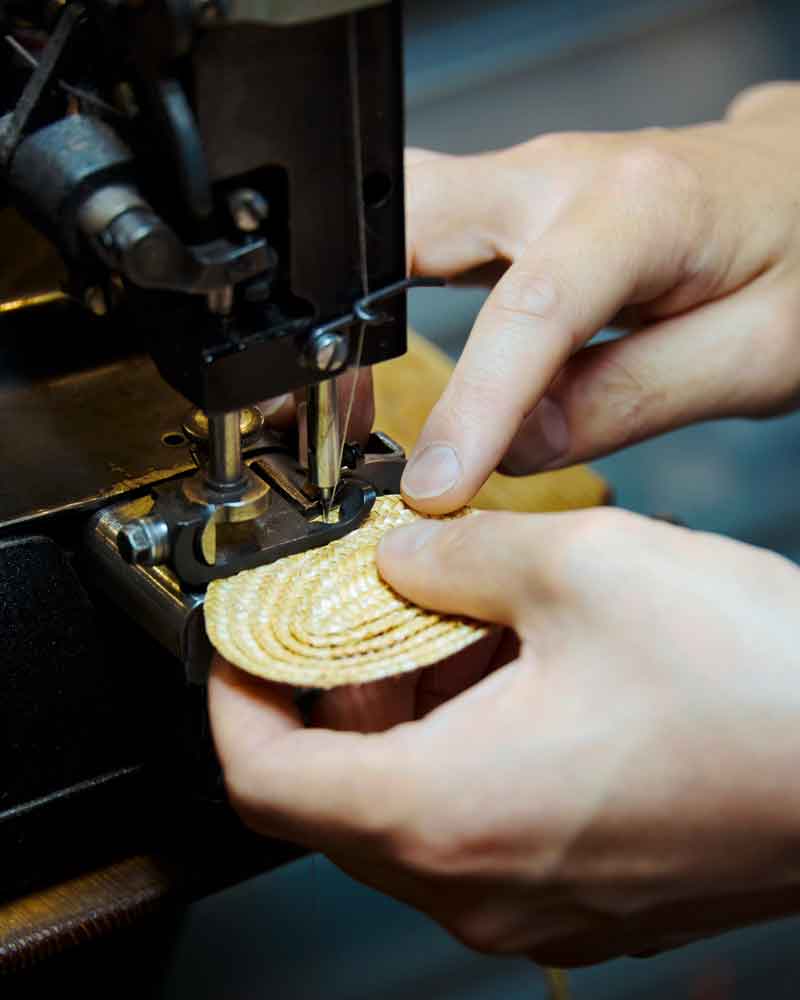
"Actually, the area where a craftsman's skill is most evident is how they use the sewing machine. While making one hat, they repeatedly make subtle changes to the needle and settings. There's basically no manual, so they feel the material, imagine the finished product, and try to find their own solution," (Suzuki).
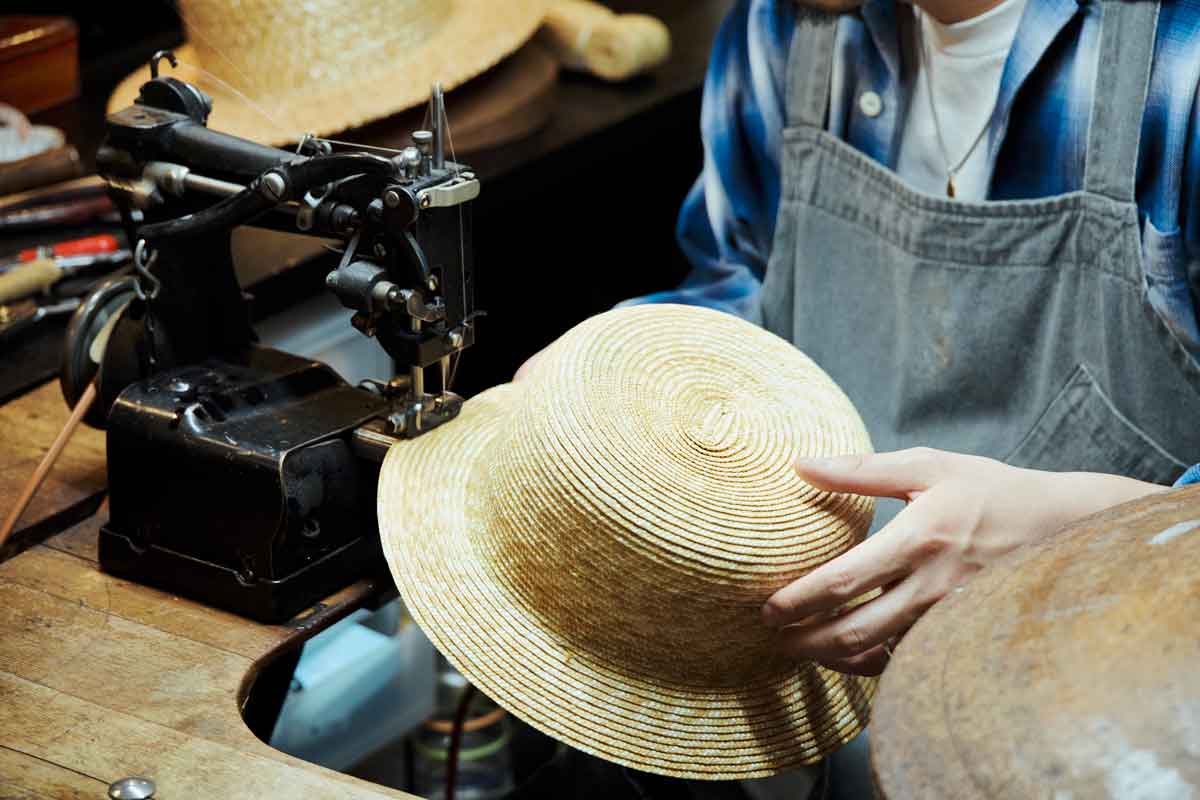
A single braid gradually forms—first into a plane, then into a three-dimensional shape.
From the crown to the brim, everything is made from a single braid.
After about 80 rotations, the basic hat shape is complete.
STEP 2 Shape it
"Made in Japan means we don't cut corners not only on the parts you can see, but also on the parts you can't see."
Of course, the hat isn’t finished just by sewing it together.
I press it onto the last, apply steam, and gradually mold it into shape at blade.
"When I was younger, I was obsessed with making things precisely. Now, I'm focusing on the texture of the ingredients and pursuing a unique flavor that only I can create," (Suzuki)
The hat's appearance can be altered by changing the cut of the brim.
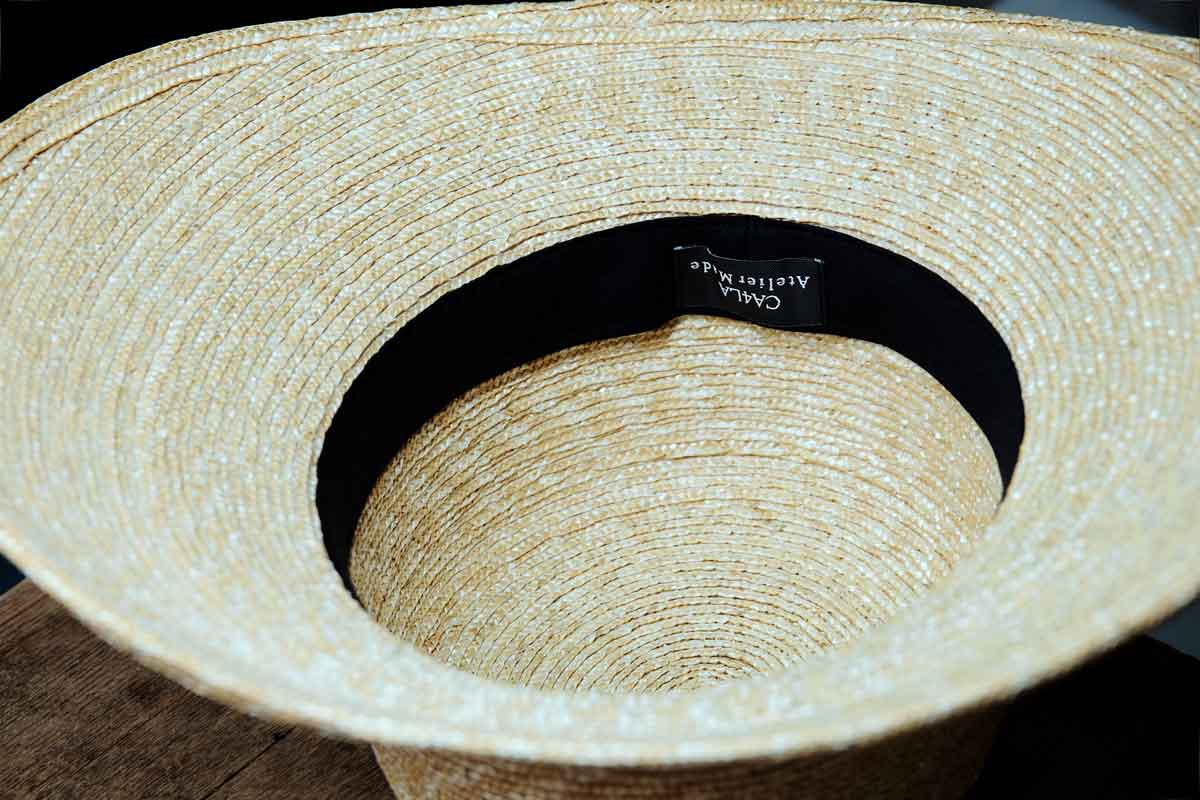
Furthermore, piping is added to the edges, and a lining is attached to the inside.
They don't compromise on appearance, but also on comfort and durability.
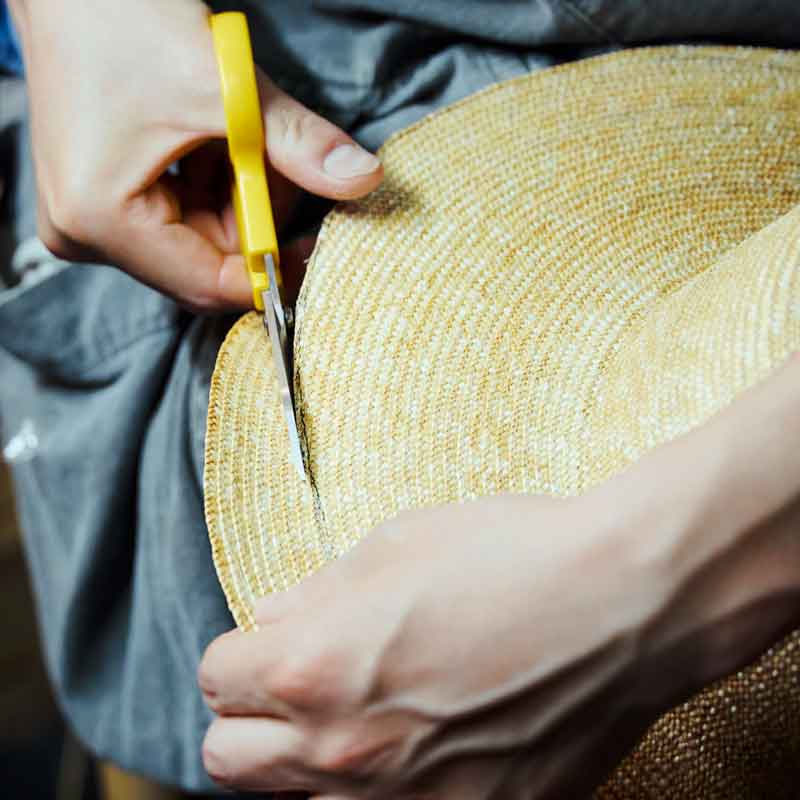
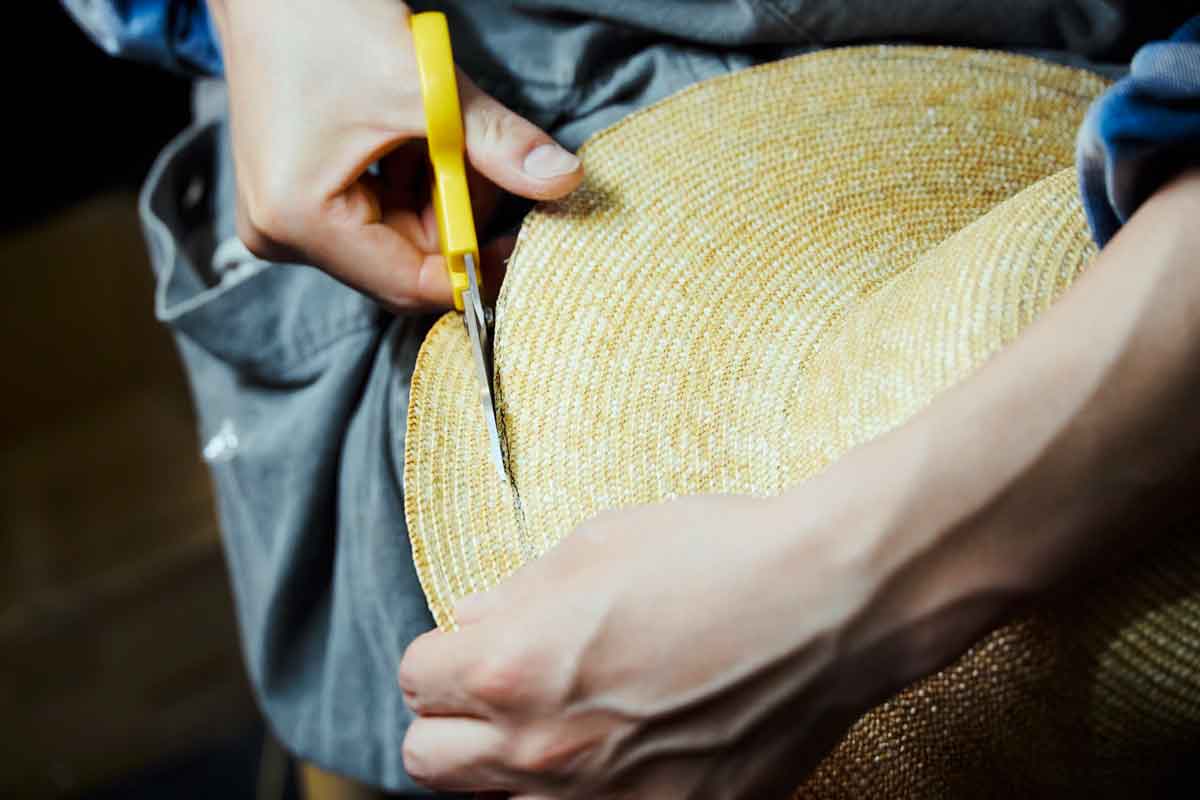
"We pay attention to even the smallest details that customers might not notice right away. We also strive for a high level of quality in the unseen aspects that customers only notice after using the product for a long time. I believe this kind of attitude, typical of Japanese craftsmen, is what leads to the quality that is trusted worldwide." (Suzuki)
STEP 3 Decorate with parts
"An endless quest without a blueprint"
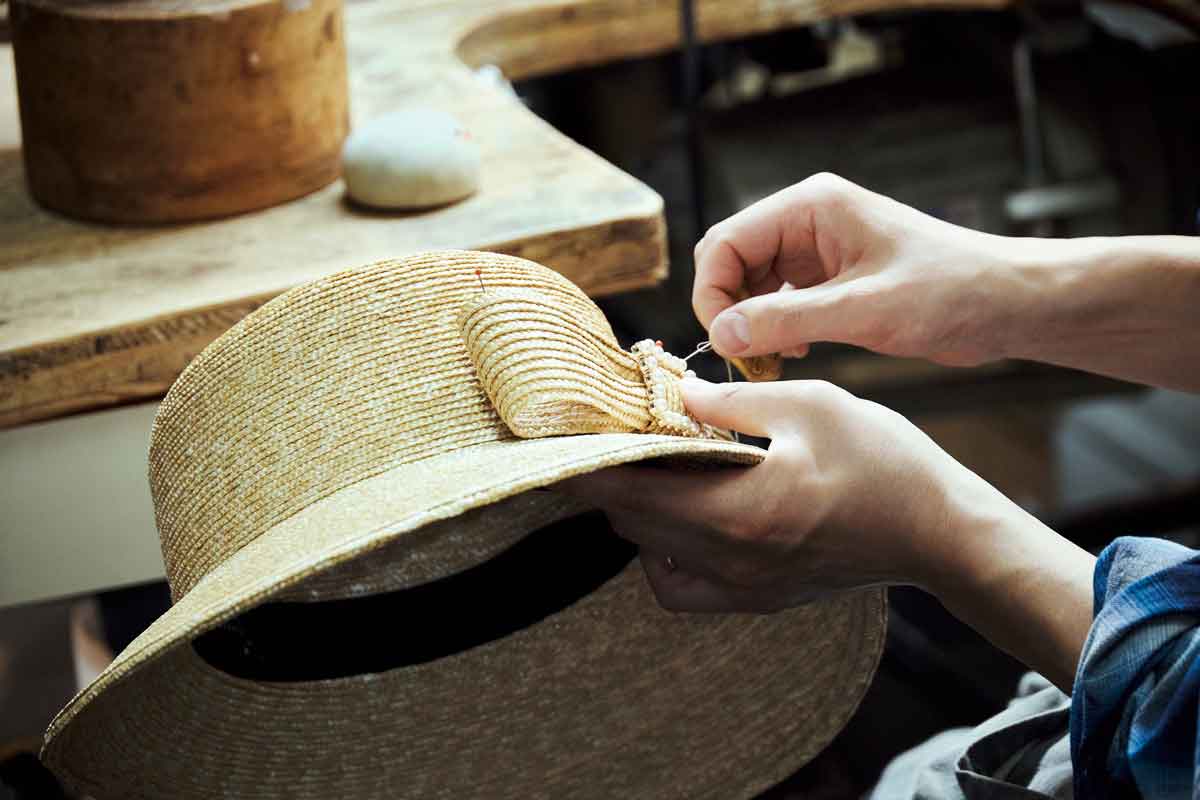
Finally, decorative parts are added.
These too are ribbons made from a single braid.
What's noticeable here is the absence of design sketches or blueprints. Apparently, all the ideas are in his head.
"As a hat maker, it's faster for me to just make a hat than to draw a picture. That said, I don't think, 'Because I'm a craftsman, this is definitely the right way.' In this atelier, we often create custom-made hats, discussing the design directly with the customer. I don't have any preconceived notions about the finished product; I create while imagining what the customer will be happiest when they wear it." (Suzuki)
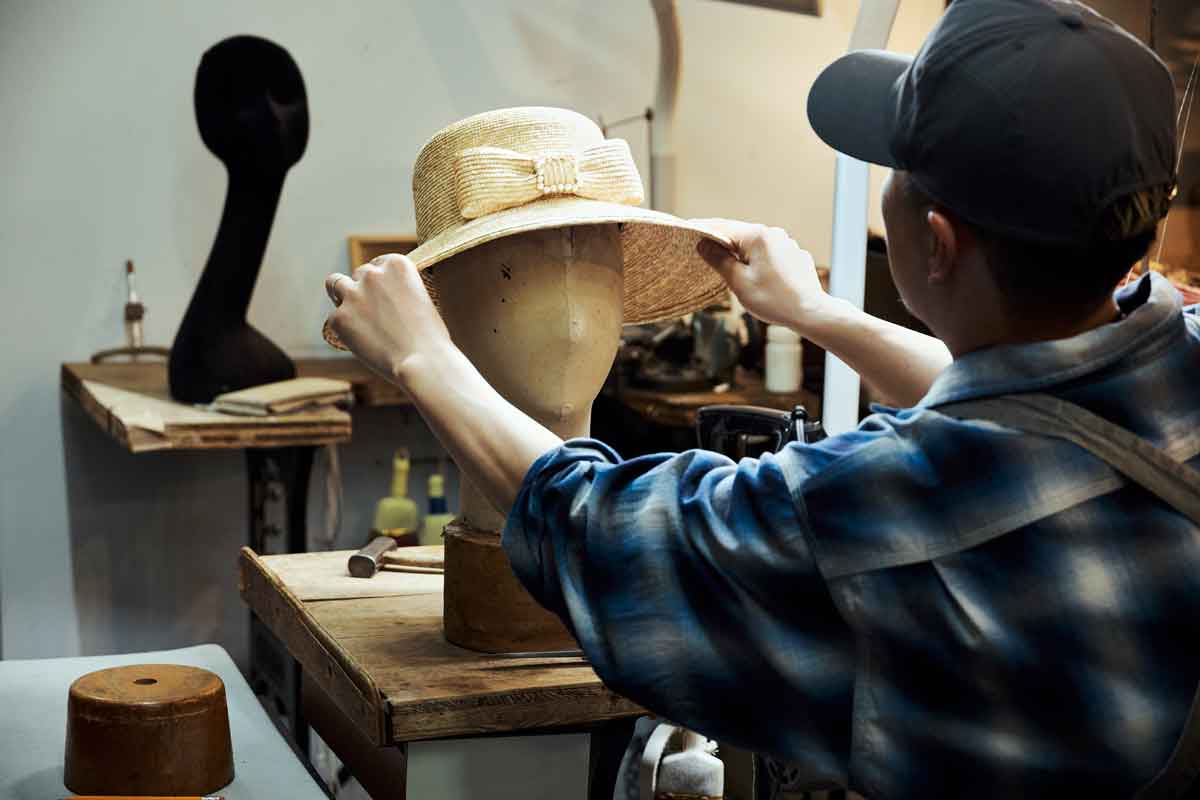
"Hats are an item that comes close to the face, so I think they have a particularly big influence in fashion. Seeing the hats I've made become familiar to customers and become part of their style is one of the most rewarding moments for me as a hatmaker. If there's anyone who says, 'I can't find a hat that suits me,' I would love for them to come and talk to me." (Suzuki)
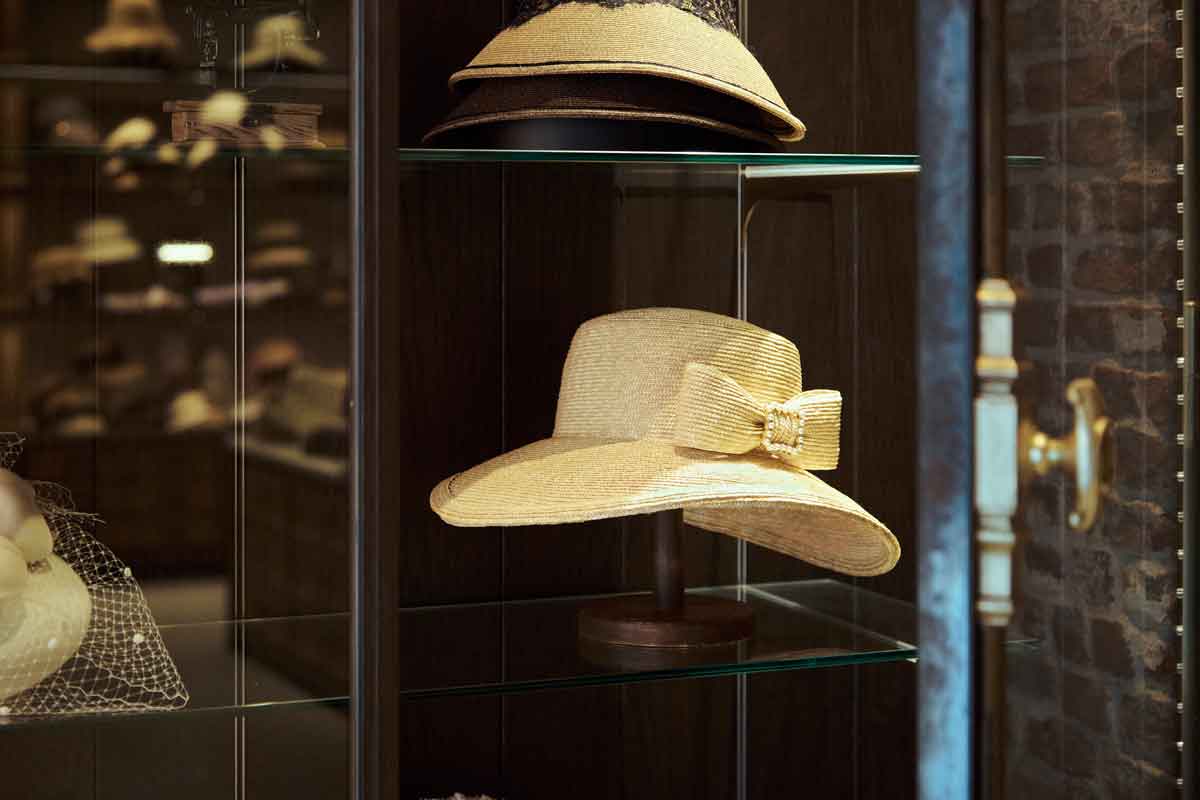
A hat made from a single braid is completed when worn by someone. For that reason, there is no single right answer.
"For me, making braid hats is an endless pursuit. "